Interactive Learning: PreK Beginning Sounds Activities
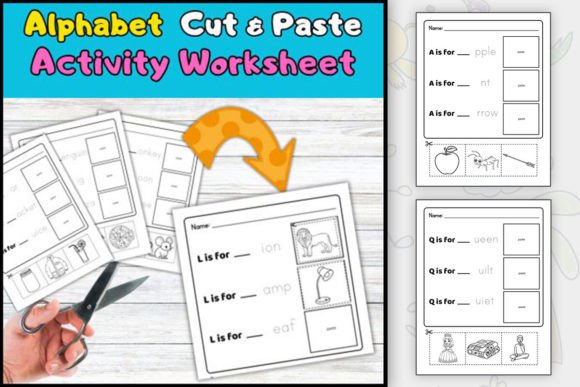
Designing for the preschool market requires a specific kind of intuition. You aren't just arranging images on a page; you are creating a bridge between a child’s curiosity and the complex world of literacy. When you pick up a resource like the PreK Beginning Sounds Color Cut & Paste workbook, you are holding more than just a PDF file. You are holding a toolkit designed to facilitate fine motor skill development and phonetic awareness simultaneously. For educators, parents, and content creators in the educational niche, understanding the value of this tactile approach is essential for producing materials that actually work in a real-world classroom or living room setting.
The Pedagogy Behind the Interaction
Why does the "cut and paste" method remain a staple in early childhood education? It comes down to multi-sensory engagement. A child doesn't just see the letter "A" or hear the sound /a/; they physically manipulate the paper, grip the scissors, and place the glue. This physical act cements the cognitive connection. The Beginning Sounds Color Cut and Paste format leverages this by breaking down the learning process into manageable, enjoyable steps. It moves away from the rigidity of standard worksheets, offering a dynamic approach to early literacy development that keeps young learners engaged rather than overwhelmed.
From a design perspective, these activities are built on clarity. The visual hierarchy must be intuitive for a four-year-old. The illustrations need to be distinct, allowing a child to easily identify whether an image represents the target sound. When you are sourcing or creating these design assets, the priority is always accessibility. The layout of the 27 pages included in this workbook focuses on that clarity, ensuring that the educational content is never lost in visual clutter.
Structure and Specifications for Seamless Production
For the professional creator—the teacher building a curriculum or the homeschool parent organizing their week—the technical specifications of a workbook matter as much as the content. This particular resource is optimized for standard home and office printing. With a page size of 8.5 x 11 inches and a "No Bleed" setting, it fits perfectly onto standard US Letter paper without requiring adjustments in your printer settings. This attention to technical detail removes friction from the preparation process.
The workbook is delivered in both PDF and JPG formats. This versatility is crucial for modern workflows. The PDF is ideal for bulk printing and maintaining vector sharpness for the letter tracing elements, while the JPGs can be utilized digitally—perhaps for virtual learning environments or for creating quick previews on social media. The High-Quality & Print Ready nature of the files ensures that the line work for tracing uppercase and lowercase letters remains crisp, which is vital for young eyes learning to distinguish letter forms.
Curriculum Integration: A to Z Mastery
The core of this collection lies in its comprehensive scope. It covers the full alphabet, ensuring a standardized learning path from A to Z. The activities are segmented into three distinct types of engagement:
- Letter Tracing: Essential for muscle memory. The workbook guides the hand to form both uppercase and lowercase variations, a critical step before freehand writing begins.
- Beginning Sounds Identification: This is the phonics engine of the workbook. By coloring images that correspond to specific sounds, children learn to isolate the initial phoneme in a word—a foundational skill for reading.
- Creative Cut-and-Paste: These tasks reinforce the previous two skills through sorting and matching, adding a layer of kinesthetic learning to the visual and auditory practice.
For those managing a classroom or a homeschool schedule, this structure allows for easy modular planning. You can dedicate a day to a specific letter, utilizing all three activity types to create a deep-dive learning experience. It turns what could be rote memorization into a varied, engaging session.
Practical Application for Creators and Educators
If you are a content creator, blogger, or small business owner in the education sector, resources like the PreK Beginning Sounds Color Cut & Paste workbook serve a dual purpose. First, they are a direct utility for the end-user (the child). Second, they are a source of inspiration for your own product design. Observing how this workbook balances text, image, and white space can inform your own editorial design or packaging design for educational products.
Consider the brand identity you are building. If your brand focuses on "playful learning," the aesthetic of these activities—friendly, clear, and interactive—should echo in your other materials, whether they are social media graphics or website layouts. The workbook acts as a physical manifestation of a brand promise: that learning can be both rigorous and fun.
Optimizing for the Modern Learner
In today's digital age, the line between physical and digital learning is blurring. While this workbook is designed for print, its structure lends itself well to adaptation. A teacher might project a JPG page onto a smartboard for a group activity before handing out the printed sheets for individual practice. This flexibility is a hallmark of good modern typography and layout design—it serves the user regardless of the medium.
Ultimately, the goal of the PreK Beginning Sounds Color Cut & Paste workbook is to build confidence. By successfully tracing a letter, identifying its sound, and pasting the correct image, a child receives immediate, tangible proof of their competence. For the adults facilitating this journey, having a reliable, well-designed, and print-ready resource makes the process of teaching not just easier, but more rewarding.